
In this page you can find information on:
- Which sun protection level should I use?
- The UV index
- When should I apply sunscreen?
- How much sunscreen should I apply?
- Which SPF is best suited to me?
- I have darker skin tone - do I still need to use sunscreen?
- What are our most UV-exposed areas?
- Protecting children and babies from the sun
- Moisturisers and foundations with SPF are not sunscreens
- What's on a sunscreen label?
- Am I protected in water?
- How long can I keep my sunscreen for?
- Sun protection in different climates
- Different types of sunscreen
Which sun protection level should I use?
'Low’, ‘Medium’, ‘High’ or ‘Very High’ ratings can be found on the product, so you can choose the level of protection most suitable for your skin type.
Aim for a sunscreen with at least SPF (Sun Protection Factor) 15 and remember to apply the correct amount.
Ensure your sunscreen has UVA protection and preferably a sunscreen which is water-resistant.
Choose a sunscreen that you find comfortable to wear, as this will help you use it regularly.
Remember that sunscreen should never be used to stay in the sun for longer.
The UV index
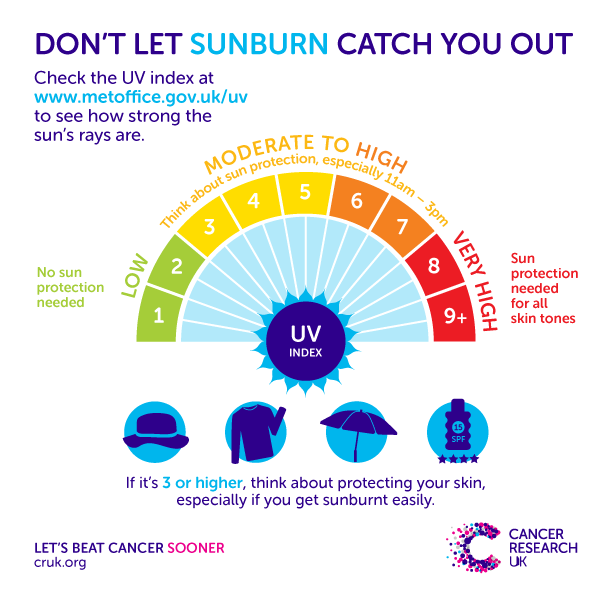
When checking the weather forecast, you might have noticed something called the UV index showing you whether UV intensity is going to be low, medium, high or very high.
The UV index is an internationally standardised scale measuring the strength of UV rays. Often, the UV index is presented as low, medium, high or very high but it can also be presented as a numerical scale.
The UV index is designed to warn people that they might be at increased risk of damaging UV rays on certain days, and to take steps to protect themselves from the sun.
Credit: Cancer Research UK
When should I apply sunscreen?
Sunscreen should be applied and allowed to dry on the skin 15-30 minutes before you go out in the sun.
Sunscreen should be re-applied often, at least every 2 hours or more frequently if washed, rubbed or sweated off.
It is important to reapply sunscreen to maintain the expected level of protection.
See our infographics below showing which areas of the body are exposed to the highest and lowest intensity of UV rays when we are going about different daily activities such as walking, swimming or relaxing in the garden or on the beach.
How much sunscreen should I apply?
Make sure you follow the instructions on how much and when to apply your sunscreen and to reapply.
Sunscreen is often labelled with instructions such as "apply generously" or "apply liberally". The recommended amount to be applied is based on 2mg/cm2 body surface area, the amount used in the scientific test to determine the product is effective. This is quite hard to visualise, but it can be more easily thought of as about 35ml for an average person or a "golf ball" size amount per body; or six to eight teaspoons.
Distribute this evenly across your body, trying not to miss any areas. Think of applying a good teaspoonful for each arm, a little more than this for each leg and two more for your chest and back.
Don't forget sneaky areas such as ears and under the chin, or the soles of the feet if you're going to be lying down with them exposed to the sun! These areas can burn very easily.
If you are using a spray sunscreen, spray generously in short bursts focusing on a small area of skin at a time, to leave a thick and even layer. Always rub it in.
If you're not sure whether you've covered all of your skin, you might want to consider applying another layer of sunscreen to make sure you don't miss any patches. To use an analogy, when you are painting a wall, it often helps to add a second coat to ensure an even finish with no gaps!
Which SPF is best suited to me?
The SPF we should use will depend on our skin type. Skin specialists use a particular tool called the "Fitzpatrick Scale":
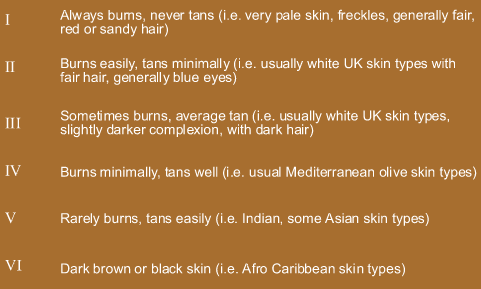
Identifying our skin type will help us to decide on the level of protection necessary during sun exposure. For example, skin type I requires very high protection since the body is less able to protect itself and the skin is readily burnt by small amounts of UV rays. Experts at the British Skin Foundation (BSF) and British Association of Dermatologists (BAD) e aware that we tend to under-estimate the sensitivity of our skin to sunlight.
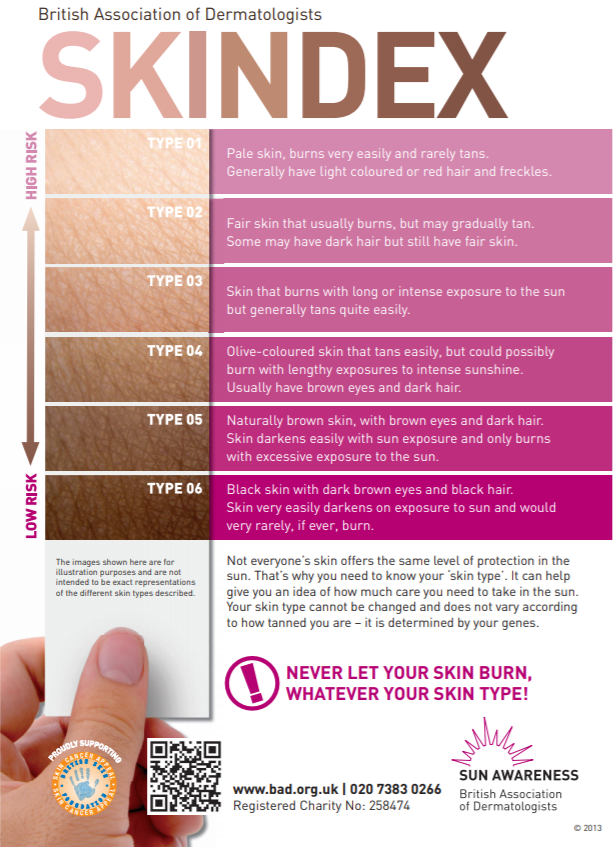
When choosing a sunscreen we should aim for one that suits our skin, but with at least SPF15 or greater, which contains UVA protection, is water-resistant and has an application method that suits our needs; this will encourage proper usage. It is important that we follow all of the instructions for best protection, but remember sunscreen should never be used to stay in the sun for longer.
A person's skin type is the same over all the body, so the same SPF can be used all over. However, particular care needs to be taken over areas that are not usually exposed to the sun e.g. the abdomen, tops of the legs and the feet, or are particularly vulnerable to sunburn such as the nose, chest, tips of the ears and even the soles of the feet.
I have darker skin tone - do I still need to use sunscreen?
Even if you have a skin type which is less prone to burning in the sun, the purpose of sunscreen is so much more than reducing the risk of sunburn. UV damage from sun exposure occurs in all skin types and tones, and sunscreen helps protect against this.
For example, skin which develops colour in the sun more easily can show dark spots as a visible sign of UV damage. Using sunscreen can reduce the risk of hyperpigmentation.
80% of the signs of skin ageing occur directly as a result of sunlight. Everyone can protect against the signs of premature skin ageing, such as lines and wrinkles, by using sunscreen.
What are our most UV-exposed areas?
These following graphics show which areas of the body are exposed to the highest and lowest intensity of UV rays when we are going about different daily activities such as walking, swimming or relaxing in the garden or on the beach. This can help us to be especially vigilant about protecting those areas of skin, bearing in mind all exposed skin need to be protected.
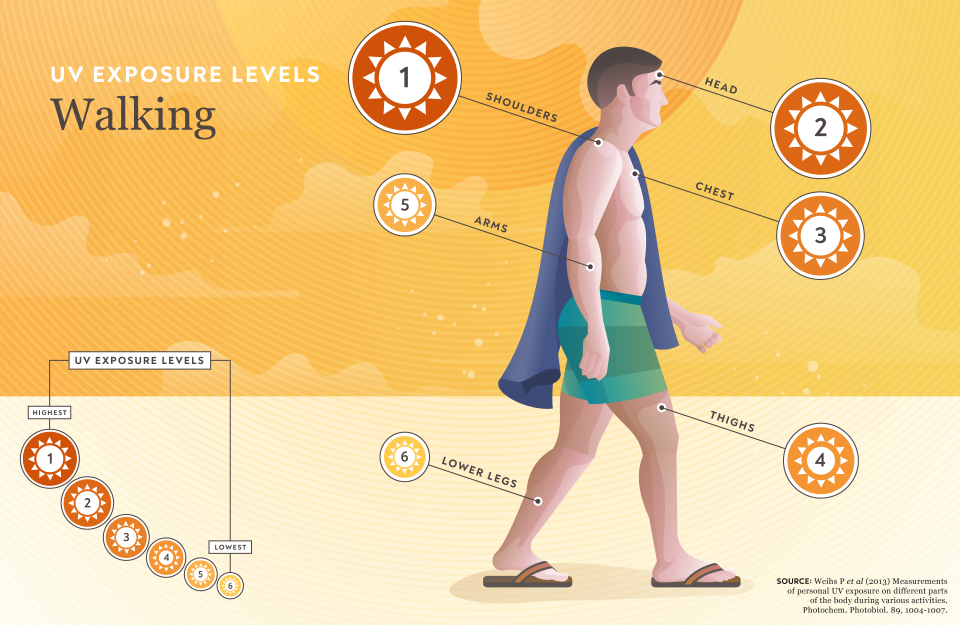
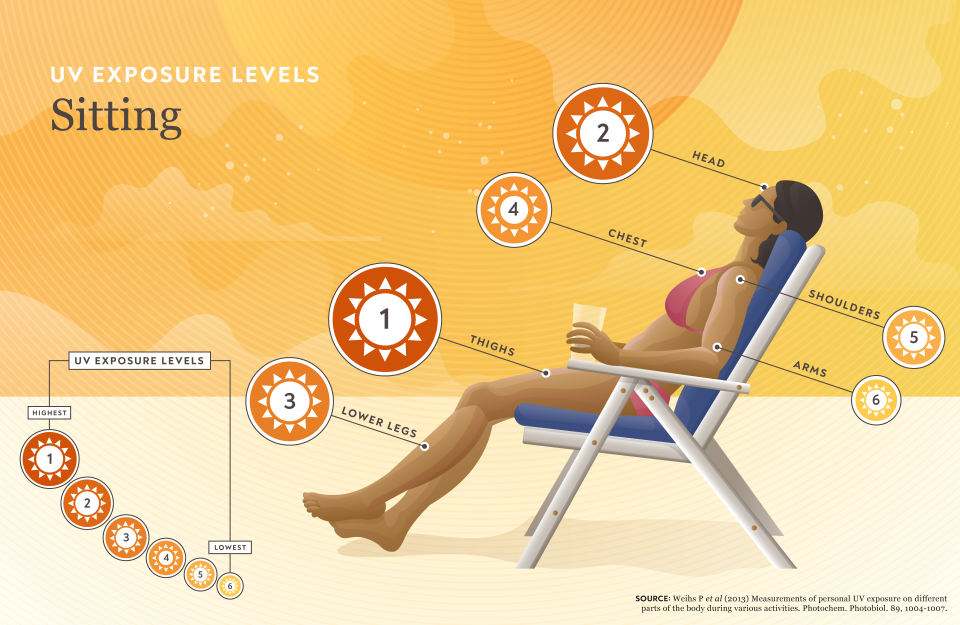
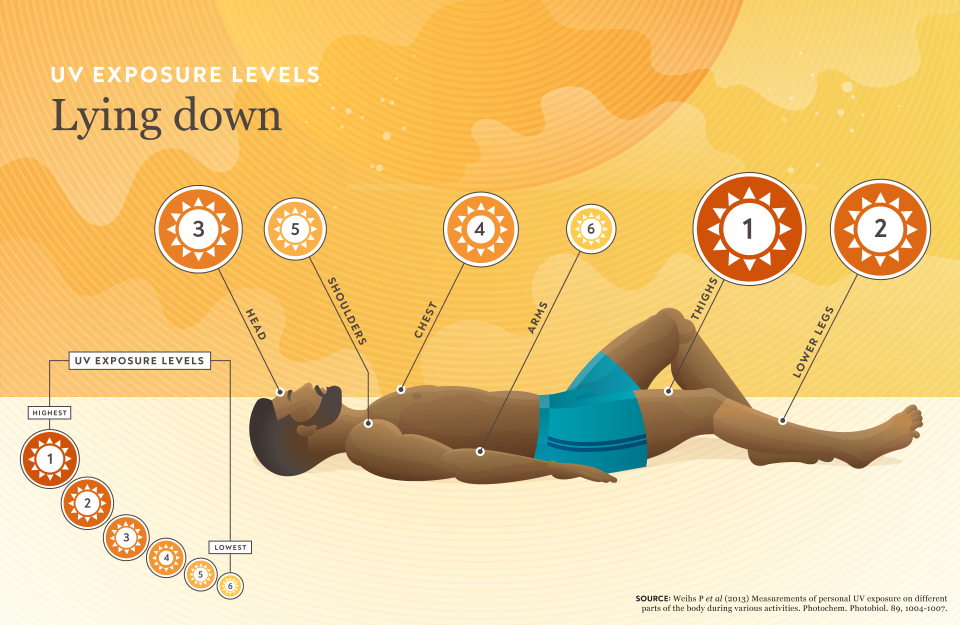
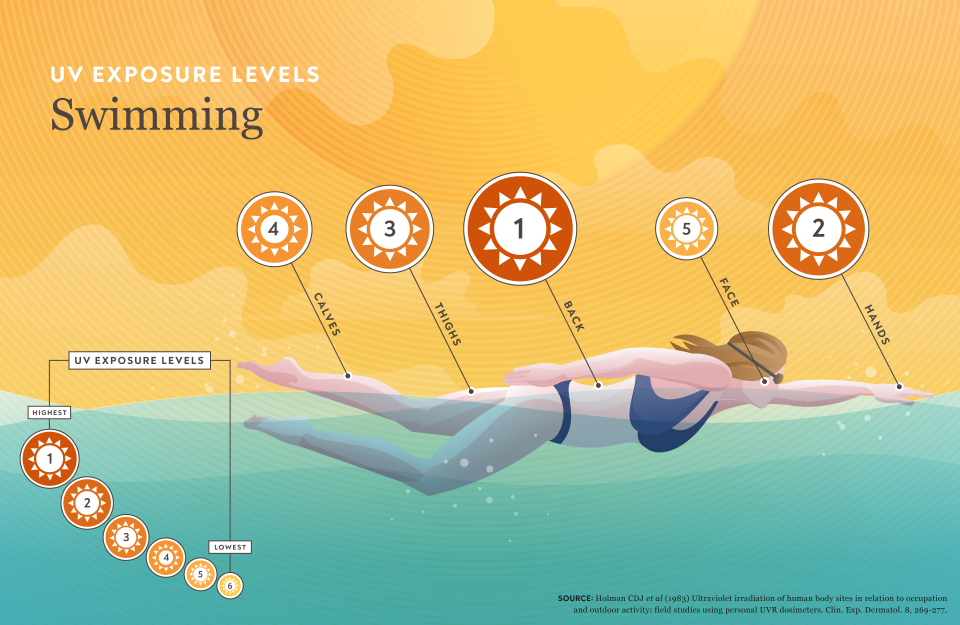
However, it's really important to remember to apply the right amount of sunscreen when you're out doing any of these, or other, daily activities, and to reapply it regularly.
Credit: Cancer Research UK
Protecting children and babies from the sun
It is essential to keep sun exposure to a minimum for young children and especially babies under the age of six months.
Keep them covered: One of the best ways to protect your child's skin from the sun's rays is to keep children covered up with loose-fitting, tightly-woven clothing and a wide-brimmed hat. Children's eyes can be more sensitive to UV light than those of adults, so they also need protection. Invest in a good pair of sunglasses for your child with 100 percent UV filtration (it's important to remember that toy sunglasses may provide no protection at all).
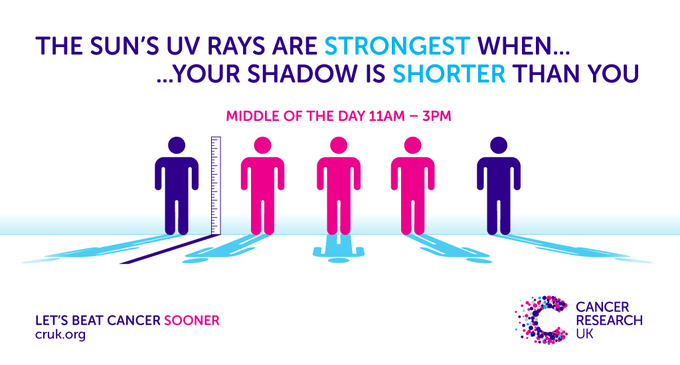
Stay in the shade: Set up your children's play areas in the shade so they are less likely to suffer from over-exposure to the sun. The sun is usually at its most intense between 11am and 3pm, so shade is even more important during this time.
Wear sunscreen: Use high-SPF sunscreen, at least SPF30, with UVA protection. Sunscreen should be applied 15-30 minutes before going out in the sun and again around the time of going out in the sun. Then reapplied every couple of hours throughout the day. Remember to re-apply if your child has been playing in the water and never use sunscreen to extend the time they spend in the sun.
Wear sunscreen: The British Skin Foundation recommends that children should use a minimum SPF 30 product with UVA protection. Of course it is important to try to keep sun exposure to a minimum for young children and especially babies under the age of six months. Sunscreen should be applied 15-30 minutes before going out in the sun and again around the time of going out in the sun. Then reapplied every couple of hours throughout the day. Remember to re-apply if your child has been playing in the water and never use sunscreen to extend the time they spend in the sun.
Healthy and hydrated: Make sure your child drinks plenty of water, particularly in hot weather; keeping up their water intake prevents dehydration and maintains healthy kidneys and bladder.
Be wary of temporary tattoos: Temporary tattoos are a popular holiday treat for children, but be aware of the dangers they could pose to your child's skin. So-called "black henna" versions can contain substances that are illegal for use in tattoos and which can cause nasty skin reactions. See our video and download our 'Black Henna' Temporary Tattoos factsheet to find out more.
Watch Dr Daisy Bennett, GP with a special interest in skin health and Chief Medical Officer, L’Oréal UK & Ireland, talk about keeping babies and children safe in the sun.
Moisturisers and foundations with SPF are not sunscreens
Certain types of moisturisers and foundations contain added protection from UV rays to help combat the rays' anti-ageing effects, because it's well-known that being out and about in strong daylight - even when it's not that sunny - can contribute to the ageing process. Such products are not intended to be used as primary sun protection: their main function is as a moisturiser or foundation and should be used in the same way you would use any other product of that type. They help to protect the skin from incidental sun exposure when you are out and about doing normal daily activities, but if you're wearing these products and you're going to spend time in the sun, you still need to apply sunscreen.
Remember to layer your sunscreen and makeup rather than mixing the products together. Applying your sunscreen and makeup in separate layers will help ensure you achieve the expected level of protection from your sunscreen. Remember to follow the instructions on the sunscreen bottle about how to apply it.
Watch Dr Daisy Bennett, GP with a special interest in skin health and Chief Medical Officer, L’Oréal UK & Ireland, talk about the difference between sunscreen products and skincare/makeup with SPF.
What's on a sunscreen label?
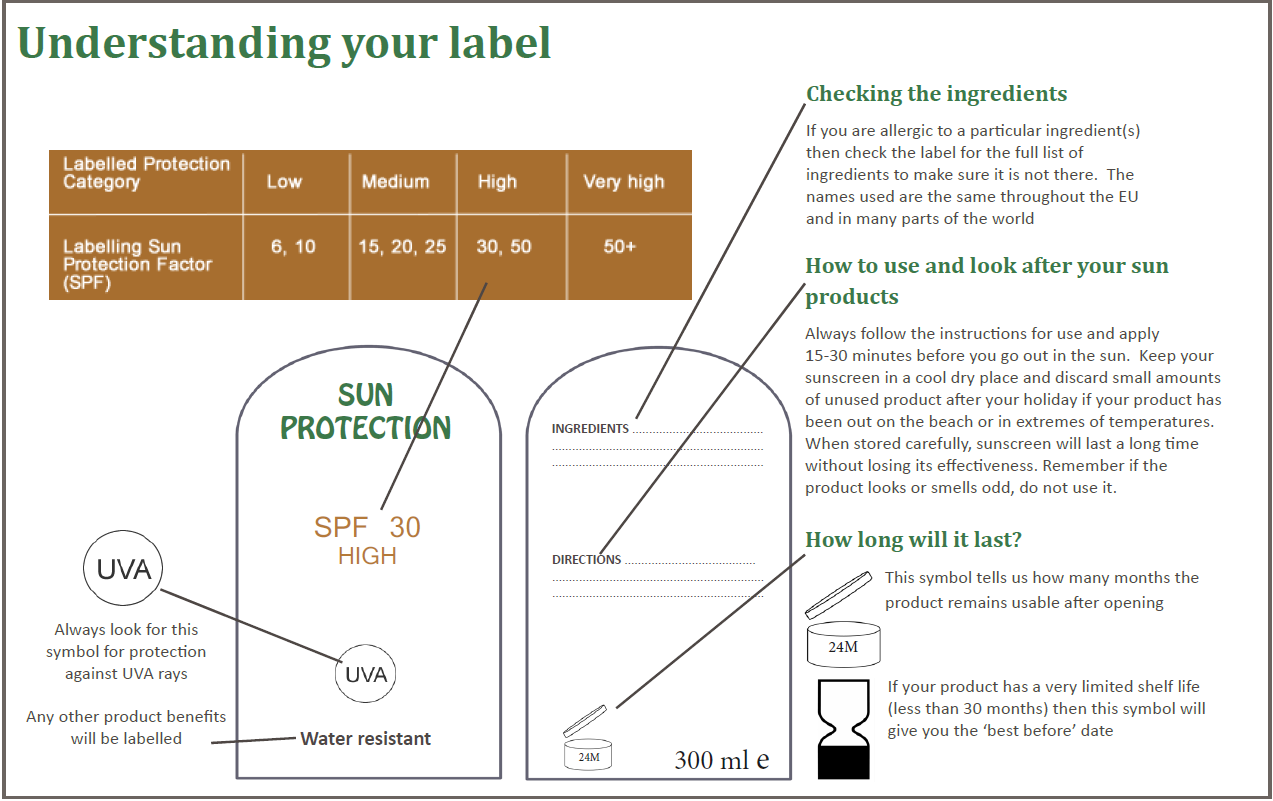
UVA protection and SPF levels are displayed clearly on sunscreen labels across the UK. There is a standardised way that sun products are tested and labelled throughout Europe. This means that in whatever country we buy our sunscreen, we'll be able to choose the UVB and UVA protection we want with minimum confusion.
Am I protected from UV rays in water?
UV rays can penetrate water to a depth of at least 10 metres when the sun is overhead.
Remember that the cooling effect of the water may be deceptive and mask severe sunburn, which only becomes apparent after leaving the water. It is important to use a water-resistant sunscreen when swimming, particularly between 11.00am and 3.00pm.
After swimming, even water-resistant sunscreens should be reapplied.
How long can I keep my sunscreen for?
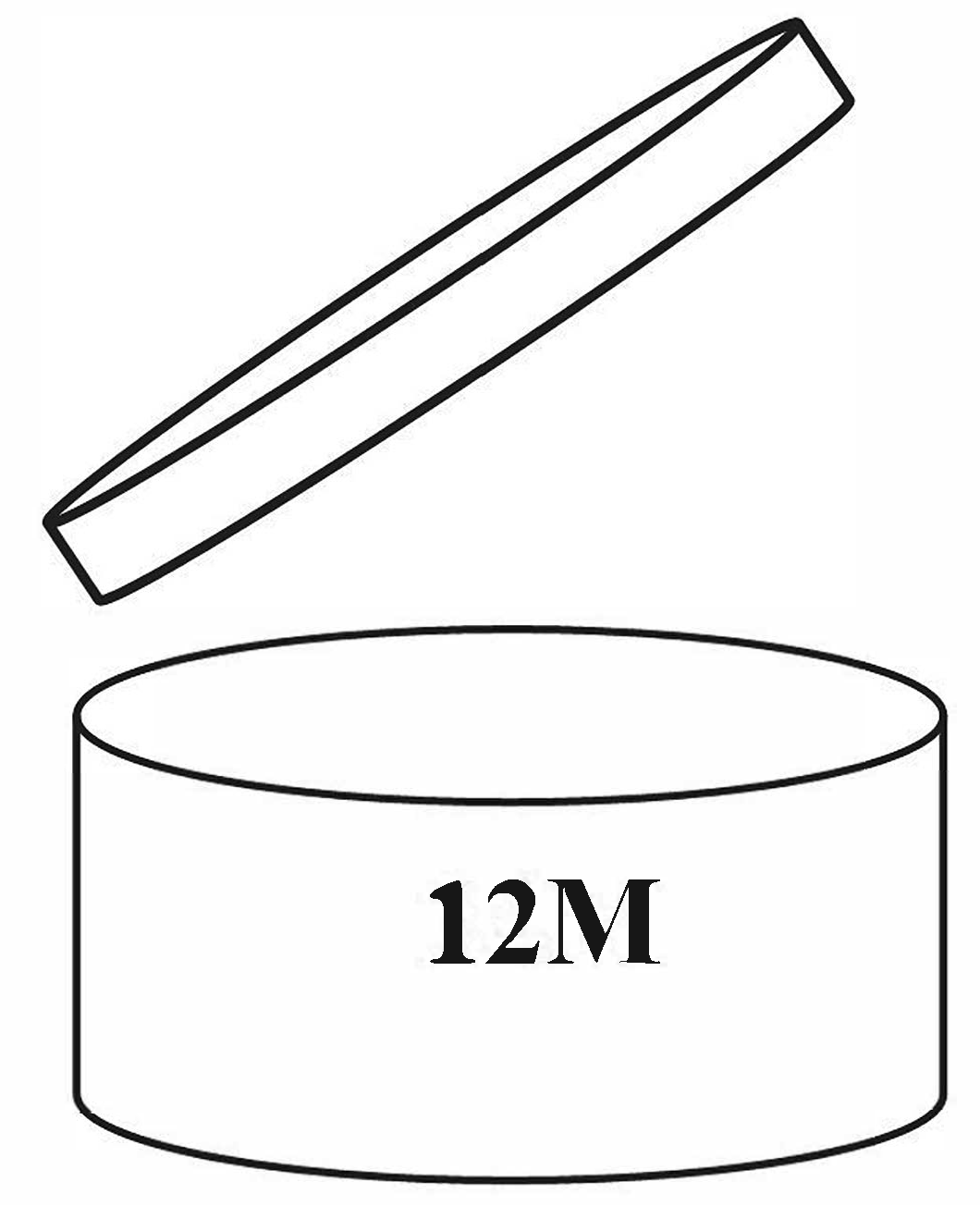 Cosmetic legislation requires that if a product has a limited shelf life (less than 30 months) then it must have a "best before" date on the pack. "Best before" dating is not common as most cosmetic products are formulated to ensure they have a long shelf life. Even so, some consumers want to know how long an opened product can be kept. For products with a shelf life of at least 30 months, products may be labelled with the "period after opening" (PAO ). The period is given as a number of months and is marked with a letter "M" under or within the 'open jar' symbol and it gives an indication of how long the product remains useable after opening.
In practice, most cosmetic and personal care products are formulated to ensure they have a shelf-life and PAO time which far exceeds the normal time it would take to use the product up. This is certainly the case for sunscreens, provided they are stored under suitable conditions and not subjected to extreme temperatures.
Read more about cosmetic product labels.
Sunscreens should be stored in a cool, dry place, away from direct sunlight and with the lids firmly closed. Sunscreens should not be exposed to repeated extreme changes in temperature, such as from refrigerator to car parcel shelf.
Products used extensively on a beach or left open for a length of time should generally be discarded after the holiday period. With correct storage and handling, nearly full packs may be kept until the following season, but small amounts left in the bottom of containers should be discarded. Also, a visual check will show if the product has separated or become contaminated. Discard a product if it has become discoloured, has an unpleasant odour or doesn't look like it should.
Sun protection in different climates
It is important to use a higher SPF when visiting hot countries. In the tropics, the season is always summer and the intensity of the midday sun is extremely high. When visiting, you should always use a sunscreen of at least SPF 30 and reapply frequently.
However, please remember that the burning power of the summer sun in the UK can be as great as in the Mediterranean and you should use sunscreen as part of your sun safe regime here in the UK too, choosing your SPF accordingly.
It is important to protect yourself from the sun when skiing. Snow reflects up to 90% of UV rays and, in addition, UV ray increases by 20% for every 1000m above sea level. For this reason, sun protection is vital in snowy conditions. Even in winter, there is sufficient UVB at skiing heights to cause severe burning. As a consequence, full precautions against UV damage should be taken, including sunscreens, clothing and goggles.
Different types of sunscreen
Manufacturers are constantly innovating new ways of presenting products. Sunscreens such as roll-ons and sprays help make the experience easier and more comfortable for the user. This is important as it encourages us to reapply. There is a wide range of products which include additional benefits, such as water-resistant or longer-lasting protection.
Whatever sunscreen type we choose, we can be confident in using it because sunscreens are developed by scientists with expert suncare knowledge and are covered by strict safety laws.
Sunscreens for the face and body
For the sole purpose of sun protection, it is not necessary to use a sunscreen product specific for the face and a product specific for the body. However, companies want to offer consumers the option to choose the product which they feel most comfortable using.
There is no difference between the level of protection offered by sunscreens for the face and for the body. A face sunscreen which provides SPF 30, will offer the same level of protection as an SPF 30 body product.
However, companies may formulate specific products for different areas of skin. For example, facial skin on the face is thinner compared to body skin; and the skin barrier function is likely to be reduced for the skin of the face*. In practice, this means that the face skin loses moisture more quickly than the body skin, and therefore it may benefit from a more hydrating product.
Face sunscreens can be formulated to tailor other specific needs for the skin (e.g. oily skin, dry skin, sensitive skin, mature skin).
Face sunscreens are usually sold in smaller packaging than body products to ensure they can be carried around during daily activities and reapplied often.
Some face sunscreens are designed to ensure minimal interaction with make-up which is applied along with the sunscreen.
Sunscreen formulations have improved a vast amount over the past decades and now there is a very wide variety of products available to provide sun protection alongside optimal skin benefits for oily skin, dry skin, sensitive skin, darker skin tones, paler skin tones, and much more. If a sunscreen has been carefully designed for a particular skin type, it will talk about this on the product’s packaging.
* H. Tagami, “Location-related differences in structure and function of the stratum corneum with special emphasis on those of the facial skin”, International Journal of Cosmetic Science (2008)
Watch Dr Daisy Bennett, GP with a special interest in skin health and Chief Medical Officer, L’Oréal UK & Ireland, talk about different sunscreens for the face and body.
Water-resistant sunscreen
Water-resistant sunscreens have been formulated to resist being washed off by water, for example during swimming, and have been thoroughly tested to make sure they work as labelled. These products may be labelled as water resistant or very water resistant. However, no product is 100% resistant to being washed off with water, therefore no sunscreen can be completely 'water-proof'. The laws that cover the manufacture of cosmetic products require that all claims made must be substantiated.
The aim of the validated test method used by suncare manufacturers is to determine that the sunscreen will not be completely washed off while being worn in the water. Interestingly, tap water is used in the test as it is a more harsh solvent than salt or chlorinated water. To pass the test, a product must retain at least 50% of the initial SPF value after immersion in water. In fact an SPF 30 product will stop approximately 97% of UV rays reaching the skin and after robust water resistance testing the product will still filter out at least 93% of the sun's UV rays. However a non-water-resistant product could be washed off the skin completely meaning no protection from UV rays (until reapplication). The 'dry' SPF number is a far more realistic indicator of the product's protection for all round use, while still offering protection after time in the water.
Of course we should always follow the instructions and re-apply our sunscreens regularly and especially after we have been swimming or towelling dry, even water-resistant products.
Durable sunscreens
Products which offer durable protection are formulated to stay on the skin longer while maintaining their sun protection. They are useful for people who can't avoid extended sun exposure or who are not able to reapply as is normally recommended, for example walkers, people participating in outdoor sports and outdoor workers.
There are various ways in which these products are designed:
- some products incorporate ingredients that help the UV filters penetrate the upper layers of the skin where they are protected more from being rubbed-off
- some use active ingredients which adhere to the skin
- others rely on the technique of binding the UV filter tightly to the skin, using water and abrasion-resistant material
Whatever the technology, the end result is a product that will stay on the skin longer while maintaining its level of sun protection. Manufacturers of durable sunscreens will comply with the same safety and claim substantiation requirements as for traditional sunscreens and will have carried out robust testing to ensure the product will provide the expected level of protection.
As with all sunscreens, it is important to follow the instructions for application and use and remember:
Sunscreen should never be used to stay in the sun for longer.