
Make-up has long been used to enhance natural beauty, express personal style, and build confidence. But behind every product, whether it’s a foundation, mascara or lipstick, is a carefully selected combination of ingredients.
Today’s cosmetics are the result of innovations in ingredient technology and scientific formulation. They are tailored to suit different skin types, tones, and application needs. Here’s how some of the most common make-up products work, and what goes into making them effective and enjoyable to use.
Primer
A primer is a cosmetic base applied to the skin after skincare but before makeup to create a smooth, even canvas. It helps makeup apply more smoothly, last longer, and can address specific concerns like shine, redness, or large pores. Different types of primers are available for various needs, including mattifying, hydrating, colour-correcting, and pore-minimising formulas.
Foundation
Foundation is designed to even out the skin tone, creating a smooth canvas for the rest of your make-up. Different formulations are available to meet specific skin needs. For example, oil-based foundations give a dewy look and work well for dry skin, while oil-free versions suit oily or acne-prone skin. Water-based foundations offer a natural matte finish, and long-wearing, water-free (anhydrous) formulas are often used for high-performance or theatrical make-up.
Regardless of type, all foundations include a mix of pigments to match skin tone, emollients to hydrate, and powders to help absorb oil and create a smooth texture. The goal is not just coverage, but to provide a breathable and balanced finish that feels light on the skin. Foundations that provide a high level of care for the skin are increasingly popular; for example, containing ingredients to hydrate the skin, increase exfoliation or reduce the appearance of wrinkles or dark spots.
Other recent innovations in foundation include soft-focus ingredients which scatter the light when they reflect it, causing an optical blurring effect. This helps to blur pores and other skin imperfections, making them less visible. Encapsulated pigments can also be used, to create foundations which reveal their colour when applied to the skin. Pigments are encased in a different-coloured shell which breaks open upon application.
Concealer
While foundation gives general coverage, concealer focuses on hiding specific imperfections, like dark circles, redness, blemishes, or pigmentation spots. Concealers have a more concentrated pigment content than foundations and take various forms including liquid, cream, stick, and powder. Liquids are versatile and blend easily, creams provide heavier coverage for dry areas, and stick or pencil formats are great for precision.
Many concealers incorporate colour correction. For instance, green-tinted formulas help neutralise redness, while peachy tones counteract blue shadows under the eyes. Thanks to advances in formulation, concealers can now camouflage while also soothing and hydrating the skin.
CC cream
CC cream stands for "colour correcting" or "complexion corrector" cream, a makeup and skincare hybrid designed to even out skin tone by neutralizing imperfections like redness, dark spots, and hyperpigmentation. It achieves this by using pigments that counteract specific colors on the skin, such as a green formula for redness or a peach one for purple undertones. CC creams are concentrated with color-correcting pigments, offering more coverage and a foundation-like finish, while still providing skincare benefits like hydration and sun protection.
Blusher and Bronzer
Blusher or bronzer gives the face a healthy, appearance. It’s applied to the cheeks to add colour and dimension and bronzer is used around the hair and jawlines, cheeks and nose to contour the face. Traditional powder blushers and bronzers remain popular for their ease of use and buildable colour, while cream and liquid products are favoured for their ability to blend seamlessly and leave a natural, dewy finish.
A blend of pigments are used to create a wide range of blush and bronzer colours—from soft pinks to vivid reds and corals and golden shades. Modern formulations ensure that the products blend easily with foundation and sits smoothly on the skin without patchiness.
Highlighter
Highlighter is a makeup product used to reflect light and illuminate the high points of the face, creating a radiant and glowing look. It is available in formulas like powder, liquid, and cream, and is applied to areas where light naturally hits to accentuate features like cheekbones, brow bones, and the bridge of the nose.
Mascara
Mascara is designed to darken, lengthen, and thicken the eyelashes, drawing attention to the eyes. Today’s mascaras are more than just pigment - they contain film-forming polymers and fibres that coat each lash and build extra length and waxes to build volume.
Some mascaras even include conditioning agents like panthenol to nourish lashes over time. Meanwhile, innovation in brush design plays a critical role. Brushes are now engineered to separate, lift, and define lashes with minimal clumping, thanks to different shapes, bristle patterns, and materials. Mascara brush design plays such an important role in the mascara’s efficacy that very many brush designs are patented.
Eyeliner
Eyeliner is a cosmetic applied around the eyes to define them and create various effects. It can be used to make eyes appear larger, brighter, or more dramatic, and is available in many forms, such as pencil, liquid, and gel.
Eyebrow products
Eyebrow products are used to enhance, fill, and define eyebrows to create a desired shape and fullness. They include pencils, powders, gels and pens that can be used to fill sparse areas, create sharper lines, or hold hairs in place, depending on the desired effect.
Eyebrow makeup can improve facial symmetry and enhance the overall makeup look. It helps to define the natural shape of the brow or create a new one.
Lip Products
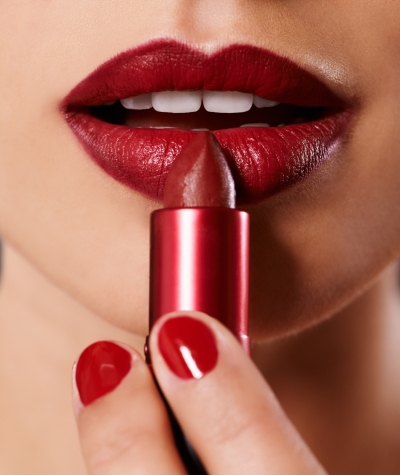
Lipsticks, glosses, and tints not only provide vibrant colour but also protect and condition the lips. A typical lipstick contains a blend of waxes (like beeswax or carnauba) to give structure and ease of application, oils (such as castor or mineral oil) for smoothness, and emollients like shea butter or vitamin E to moisturise and soften.
Pigments are carefully selected to deliver colour payoff that lasts, whether you're looking for a matte, glossy, or satin finish. Many modern lip products also include sunscreens to protect this delicate area from UV damage, and fragrance or flavour for added appeal.
Face Powders
Powders are used to set make-up, reduce shine, and give a more even skin tone. Loose powders are ultra-fine and lightweight, ideal for setting foundation without a heavy feel. Pressed powders are convenient for touch-ups throughout the day. There are also translucent powders that work for any skin tone without adding colour, as well as mineral powders for those with sensitive skin.
Setting Sprays
Setting sprays are often the final step in a make-up routine. Once sprayed onto the face, they form a lightweight, invisible film that helps hold make-up in place. Designed to withstand humidity, heat, and daily wear, they can prevent smudging, fading, or transferring, especially important for long days or special occasions.
Formulations can vary from dewy to matte finishes, and some include skincare benefits like hydrating ingredients or antioxidants for added skin protection.
Make-up innovation
Each make-up product is a blend of cosmetic chemistry, artistry, and performance. As our understanding of skin biology and cosmetic science grows, so do the capabilities of make-up. From better pigments to advanced delivery systems, today’s products do more than just beautify - they protect, nourish and care for the skin.