
Talc is a naturally occurring mineral known for its soft, smooth texture. It belongs to a group of compounds called hydrated magnesium silicates. Cosmetic-grade talc, used in personal care products for over 120 years, is carefully sourced from selected mines for its high purity and quality. Unlike industrial talc, cosmetic talc undergoes extensive purification and quality control to ensure it is free from harmful impurities, including asbestos.
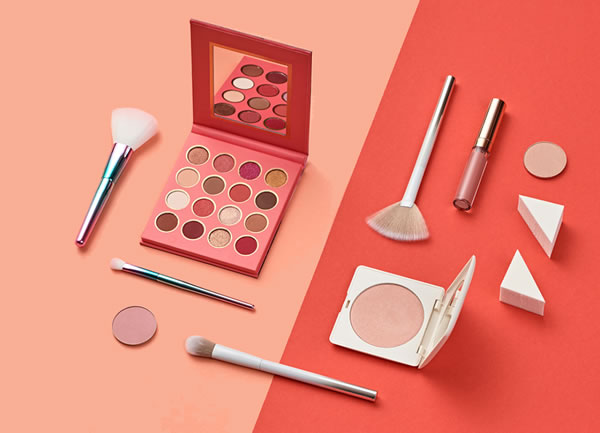
Cosmetic talc is widely used for its moisture-absorbing properties, making it ideal for body powders, blushers, eyeshadows and other skincare and cosmetic products. It is also found in pharmaceutical and food-grade products such as tablets and chewing gum.
Can talc cause cancer?
Concerns have been raised about a potential link between talc and ovarian cancer. However, no scientific study has ever proven that cosmetic talc causes cancer.
In 2015, the US Cosmetic Ingredient Review Expert Panel assessed talc's safety and concluded it is safe to use in cosmetic products. A major 2020 study published in JAMA, led by O'Brien et al. and funded by the US government, followed a quarter of a million women and found no statistically significant association between talc use and ovarian cancer.
The US FDA and the National Toxicology Program also reviewed the safety of cosmetic talc and found no evidence to support claims of harm when talc is used as intended.
Older retrospective studies suggesting a link between talc and ovarian cancer are considered less reliable due to recall bias and lack of proper control groups. In contrast, large prospective studies like the Nurses' Health Study (2000), Women's Health Study (2014), and the O'Brien study (2020) found no evidence of harm. These more robust studies are the basis for regulatory conclusions that cosmetic talc is not a carcinogen.
In 2026, the UK Health and Safety Executive (HSE), published a comprehensive review of the safey of talc, and any potential cancer causing effects, in its Agency Technical Report on the Classification and Labelling of Talc1. The HSE concluded that "the available epidemiology data provide very limited evidence of a link between talc exposure and ovarian cancer in humans" and that in regard to lung cancer "taking all factors into consideration, the strength of the evidence is not enough to warrant classification [as carcinogenic (cancer-causing)]."
1Health and Safety Executive, Agency technical report on the classification and labelling of talc (not containing asbestos or asbestiform fibres), January 2026
Can talc migrate to the ovaries?
Scientific consensus maintains that talc cannot reach the ovaries when applied externally. A 1994 FDA-led workshop concluded there was no evidence talc could migrate to the ovaries. This was reaffirmed in 2015 by the US Cosmetic Ingredient Review2 and again in 2023 by a systematic review by Lynch et al., who concluded that no physiological pathway has been proven3. The 2026 HSE Technical Report also notes that translocation is unproven1.
2 Fiume MM et al (2015) Safety Assessment of Talc as used in cosmetics. International Journal of Toxicology 34 (supp1) 66S-129S
3Lynch HN, Lauer DJ, Leleck OM, Freid RD, Collins J, Chen K, Thompson WJ, Ierardi AM, Urban A, Boffetta P and Mundt KA (2023) Systematic review of the association between talc and female reproductive tract cancers. Front. Toxicol. 5:1157761. doi: 10.3389/ftox.2023.1157761
Is talc the same as asbestos?
No. While both are magnesium silicates, their structures differ completely. Asbestos forms harmful, needle-like fibrous structures; talc forms flat, plate-like particles. Cosmetic talc is subject to strict testing to ensure it contains no asbestos. Only asbestos-free, high-purity talc is permitted in cosmetics.
Can cosmetic talc cause lung disease or mesothelioma?
Recent peer-reviewed studies, including one by Ierardi et al. in Toxicology and Applied Pharmacology (2022)4, found no causal link between cosmetic talc use and mesothelioma. Another by Lynch et al. (2022)5 supported this conclusion. Importantly, talc does not contain fibres like asbestos and has not been shown to cause harm when inhaled under normal cosmetic use conditions. The HSE Technical Report on talc1 reviewed all available evidence on the potential for talc to cause lung cancer and concluded that "taking all factors into consideration, the strength of the evidence is not enough to warrant classification [as carcinogenic (cancer-causing)]."
4Michael Ierardi, Ania Urban, Gary M. Marsh, A quantitative weight of evidence assessment of Hill's guidelines for causal inference for cosmetic talc as a cause of mesothelioma, Toxicology and Applied Pharmacology, Volume 417, 2021, doi.org/10.1016/j.taap.2021.115461
5Lynch HN, Lauer DJ, Thompson WJ, Leleck O, Freid RD, Collins J, Chen K, Ierardi AM, Urban AM, Cappello MA, Boffetta P, Mundt KA. Systematic review of the scientific evidence of the pulmonary carcinogenicity of talc. Front Public Health. 2022 Oct 11;10:989111. doi: 10.3389/fpubh.2022.989111
What about IARC and ECHA classifications?
In 2024, the IARC classified talc as "probably carcinogenic" (Group 2A), but this was based on limited human evidence and animal studies which used unrealistically high exposure levels. The European Chemicals Agency (ECHA) similarly classified talc as a Category 1B carcinogen under a "worst-case" scenario.
These classifications do not reflect how talc is used in cosmetic products. UK and EU cosmetic laws require a separate, product-specific safety assessment that considers real-life exposure. This continues to confirm that cosmetic talc is safe for use.
The bottom line
Talc is one of the most thoroughly studied cosmetic ingredients. Cosmetic-grade talc is highly purified, rigorously tested, and considered safe by major global scientific and regulatory bodies. You can be confident that talc-containing cosmetics meet the highest safety standards, based on decades of high-quality research and expert review.