

When we think about the environmental impact of a product, it’s easy to focus on what we can see: the packaging, the materials used or the waste left behind. But the true environmental footprint of a product stretches much further. From the extraction of raw materials to manufacturing, transportation, everyday use and final disposal, every stage of a product’s life has the potential to affect, or protect, our planet.
That’s why companies in the cosmetics and personal care industry are embracing a whole-life approach known as “Life Cycle Thinking”. This way of working looks at the entire journey of a product, from start to finish, to understand, minimise, and improve its impact on the environment.
What is Life Cycle Thinking?
Life Cycle Thinking, often called LCT, encourages companies to look beyond one single part of a product’s life and consider the bigger picture. It’s about understanding the environmental impacts across every stage, from sourcing ingredients and manufacturing to how consumers use the product at home, and how the product or its packaging is disposed of at the end of its life.
In the cosmetics industry, this approach helps companies design products that are not only safe and effective for people but also more considerate of the planet. This includes thinking carefully about packaging materials, manufacturing processes, water use, transportation and even how consumers use products like shampoo, shower gel or toothpaste.
Interestingly, studies show that for many personal care products, the biggest environmental impact often happens during everyday use. For example, when we wash our hair, rinse our faces or brush our teeth. That’s why reducing a product’s environmental footprint isn’t only about making production greener; it’s also about helping people use products more sustainably in their daily lives.
Why is Life Cycle Thinking important?
One of the most important principles of Life Cycle Thinking is avoiding “burden shifting”. This means ensuring that an environmental improvement in one area doesn’t create a new problem somewhere else. For example, reducing energy use during a product's use phase only makes sense if it doesn't increase material consumption or waste in manufacturing.
For many years, efforts to lower environmental impacts focused on the most visible stages: improving factories, reducing air and water pollution, or cutting waste from production. These actions remain vital, but they don't always tackle the full picture. Often, much of a product’s environmental impact occurs outside the factory, through raw material extraction, product transportation, consumer use and disposal.
By considering the entire product life cycle, companies can identify the most effective, meaningful ways to reduce environmental impacts, while ensuring their actions are genuinely beneficial and don’t cause unintended problems elsewhere.
What is Life Cycle Assessment (LCA)?
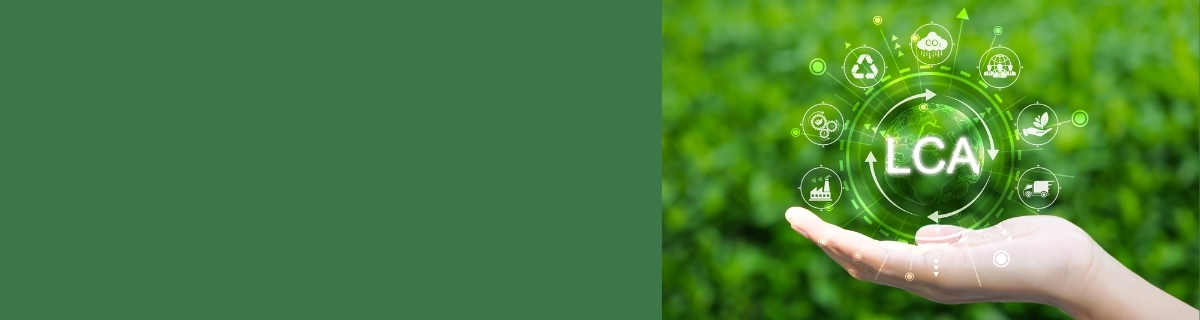
To put Life Cycle Thinking into practice, many companies use a scientific process known as Life Cycle Assessment, or LCA. This is a detailed analysis that measures all the resources used and emissions generated throughout every stage of a product’s life, from raw material extraction through to disposal or recycling.
LCA provides valuable insight into how much energy, water and raw materials are consumed, as well as the waste, emissions and pollution produced. By understanding this, companies can make informed decisions to reduce environmental impacts. That could be by switching to more sustainable ingredients, improving packaging, refining manufacturing processes or encouraging more eco-conscious consumer habits.
It’s important to remember that LCA doesn’t make decisions for us. It provides scientific evidence to help guide companies towards the most sustainable choices, showing the trade-offs, benefits and areas where real improvements can be made.
How does Life Cycle Assessment work?
Life Cycle Assessment tracks all the material, energy, and waste flows associated with a product, . This starts with extracting raw materials, followed by manufacturing, packaging, distribution, use, and finally, disposal or recycling.
To complete an LCA, companies compile detailed information on everything from raw material inputs to emissions and waste. This data forms what’s known as a Life Cycle Inventory (LCI). Scientists then use internationally recognised methods to classify and assess these impacts, such as how much greenhouse gas is produced, how much water is used or the potential for pollution. This ensures that LCA results are reliable, transparent and scientifically sound.
Once the analysis is complete, the data can be modelled to explore different scenarios. For example, a company might test whether switching to a new ingredient lowers environmental impacts, while also checking for unintended effects, such as increased energy use or waste in other areas.
The benefits and limits of LCA
Life Cycle Assessment is one of the most powerful tools for improving a product’s environmental performance. It helps companies make informed decisions based on evidence, reduce negative impacts, and find smarter ways to design, manufacture and use products.
But LCA does have its limits. It focuses on measurable, environmental factors, such as energy use, emissions, or waste, but different models rank elements of an assessment with varying importance. That’s why LCA is often used alongside other tools to give a fuller picture of sustainability.
LCAs also only capture a moment in time. For example, if, the year following an evaluation, the weather is exceptionally hot, and the raw materials have all required additional water to survive, the LCA would change.
Another consideration is complexity. Carrying out a full LCA is resource-intensive and typically most accessible to larger companies with the capacity to gather the necessary data and conduct detailed assessments. But as technology advances and sustainability tools become more accessible, Life Cycle Thinking is becoming a practical reality for businesses of all sizes.
Life Cycle Thinking in action
Across the cosmetics and personal care industry, Life Cycle Thinking is already shaping more sustainable products. Companies are investing in biodegradable ingredients, recyclable packaging, energy-efficient manufacturing, and formulas that require less water during use. They’re working not only to reduce environmental impacts at the production stage but to help consumers use products more sustainably every day.
Life Cycle Thinking is not about looking at one part of a product’s impact, it’s about considering the whole picture. It helps ensure the products we rely on remain safe and effective, while reducing their footprint on the planet. By taking this whole-life approach, the cosmetics industry is working towards a more sustainable future, for people, products, and the environment we all share.
The cosmetics industry has been developing a tool to measure the environmental footprint of cosmetic products. Called the EcoBeautyScore, this tool is designed to fairly compare products within the same category, for example, shampoos with other shampoos. In future, brands will be able to share the scores to help consumers make more informed and sustainable choices when choosing their products.